 MammaFlow
🔥
Calories & macros
Calories, carbohydrates, protein, fat and fiber per 100g — realistic USDA-style estimates for every food and home-cooked dish.
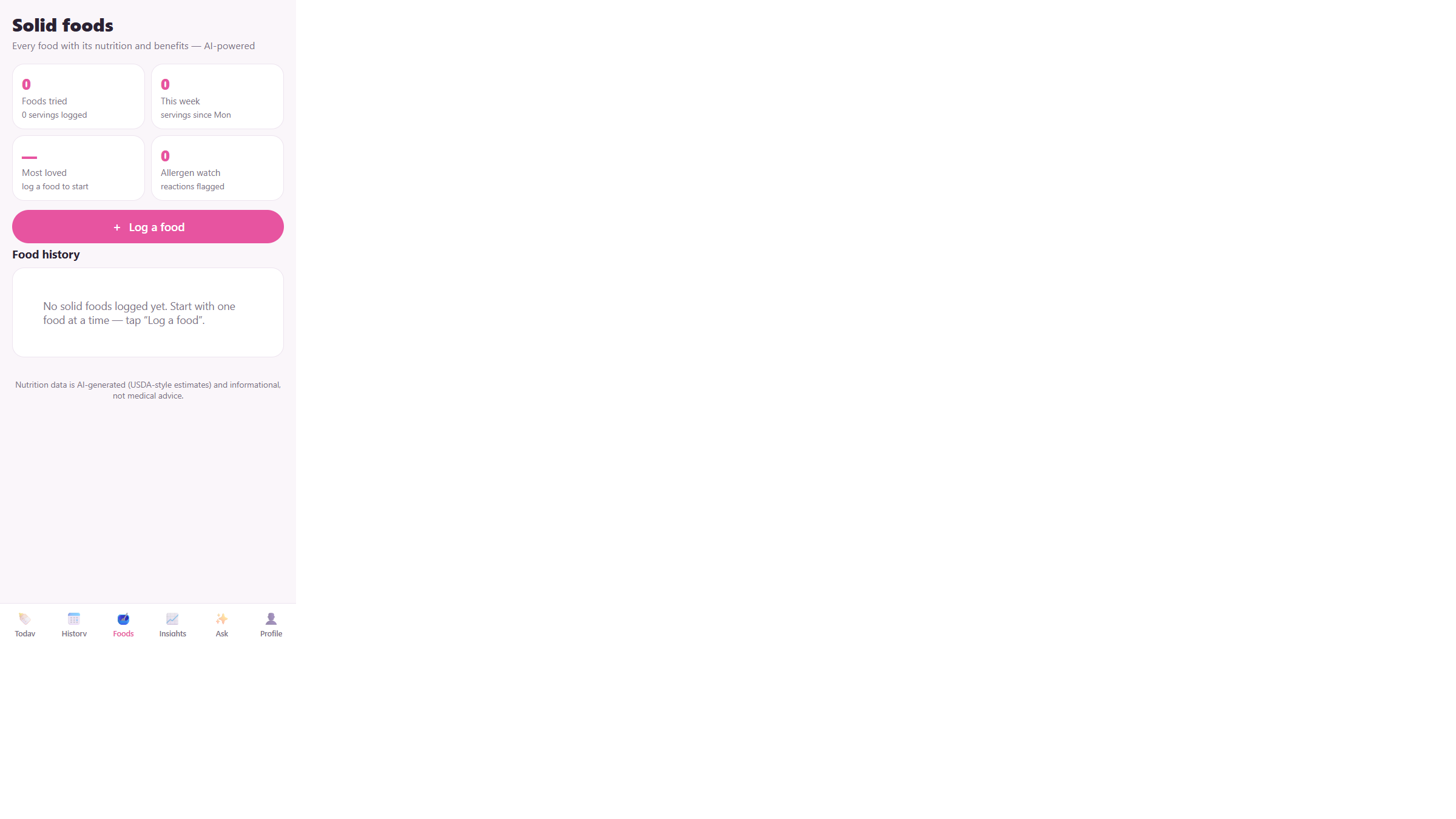
Starting solids should feel exciting, not like homework. Log any food — mashed banana, carrot purée, idli — and MammaFlow's AI instantly adds its nutrition, benefits and safety tips.
Type a food name. Get a complete nutrition card in seconds.
Calories, carbohydrates, protein, fat and fiber per 100g — realistic USDA-style estimates for every food and home-cooked dish.
The vitamins and minerals that matter for a growing baby — potassium, iron, vitamin C and more — in plain language.
Short, readable reasons this food is good for your little one: gentle digestion, steady energy, brain development.
Common-allergen warnings, texture and choking guidance, typical serving sizes and the age most babies are ready.
Record whether baby loved it, was neutral, disliked it, or had an allergic reaction — building a history you can share with your doctor.
Every meal grouped by day with meal type and amounts — plus stats: foods tried, servings this week, most-loved food and allergen watch.
Most babies are ready around 6 months, when they sit with support, show interest in food and have lost the tongue-thrust reflex. Always check with your pediatrician before starting. Our starting solids guide walks through the signs of readiness.
Calories, carbohydrates, protein, fat and fiber per 100g, key vitamins and minerals, benefits for baby, a typical baby serving size, and safety tips covering texture and choking hazards.
Yes — every entry records baby's reaction (liked, okay, disliked or allergy), building a food history you can review and share with your pediatrician.
Set up your baby's profile and log the first food tonight — the nutrition card fills itself in.
Open the web app